Who is developing St Andrews West?
History has shown that some of the best places are developed by those who really care about the area, places built to be lived in for the long term by people who intended to stay and be judged by the result.
Headon is a family developer, based in the St Andrews area. The Headon Family are building in a town they call home, with a direct stake in a result that works for residents and for St Andrews as a whole, not only for the people who buy here.
Residents notice the attention that personal connection and pride in the place brings. As one put it, “Pat and Joe take an interest in everything, and it is important to them that things are done well.”
How has St Andrews West been designed for everyday life?
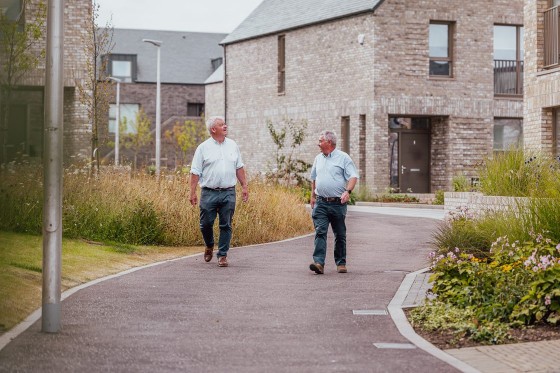
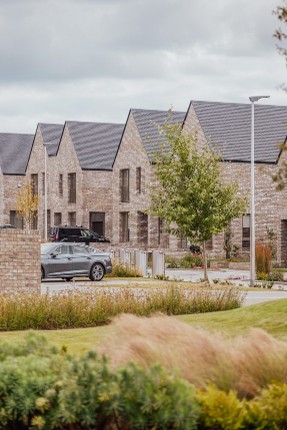
A large development must resolve into smaller places you can recognise. Streets with their own character, clear ways through, homes set at a comfortable distance from each other. When that works, daily life feels legible rather than anonymous, and anonymity, not scale, is the real risk in a big scheme.
Early residents notice the difference. One couple who bought a Fishers apartment describe a layout that breathes: “We feel there is a nice distance between the houses too, it does not feel overlooked or crammed together.”
They also notice what calm, legible streets allow. One family with a young son put it plainly: “There is no danger, he can go out and about on the streets on his little bike.” Streets a small child can use independently are a strong signal that a place is working at human scale.
How well connected is St Andrews West?
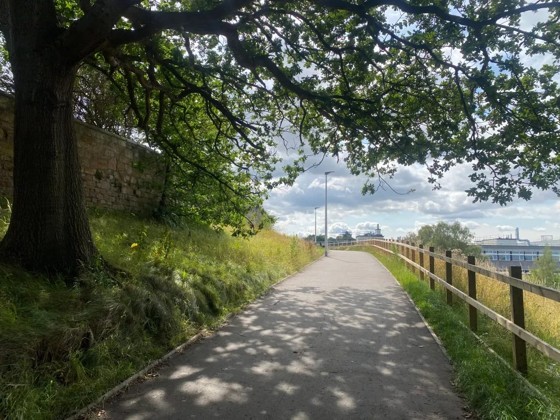
Connections matter when they take you somewhere you want to go, into the town and to everyday destinations, rather than simply looping around the site. Routes like that also do quiet social work. They are where you start to recognise a face on your daily walk, exchange a greeting, get to know each other’s pets, and slowly feel you belong.
At St Andrews West the active travel route into town is a great example - one household puts it simply: “We use the active travel route all the time.” For this family it carries the most ordinary of journeys. They cycle into town together, where their young son tends to run out of steam somewhere around local ice cream institution Jannettas, and they cycle him to nursery too.
A route that carries real trips like these, not just a line on a plan, is one of the surest foundations for everyday contact between neighbours and for making the fabric of everyday life sustainable and friction free.
How does the landscaping influence the way the development feels?
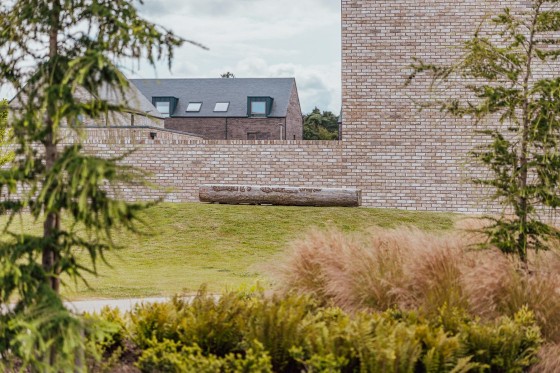
Community does not only happen inside buildings. It happens in the spaces between them. Phase 1 at St Andrews West has had time to establish, and its planting and trees already soften the streets and give the place a settled, calm and cared for feel rather than the raw look of a site still finding itself.
The careful consideration given to the landscaping also makes room for children without turning play into a fenced enclosure. Informal features set into the greenery give younger children somewhere to explore as part of everyday movement around the neighbourhood. Play woven into the public realm, rather than boxed off in a corner, is both better placemaking and closer to how families actually use a neighbourhood.
How is a community beginning to form at St Andrews West?
The strongest signs of community are the ones a developer cannot script. You cannot design friendship. You can design places where it has somewhere to happen and then leave room for residents to take over.
That is already happening here. One household describes neighbours organising “a Christmas party which really brought people together.” Another recalls a neighbour inviting them in to look around a completed home before they had moved, which helped them settle a finishing choice in their own place. These are small acts. They are also the real material of a community forming, and they matter precisely because nobody packaged them as an amenity.
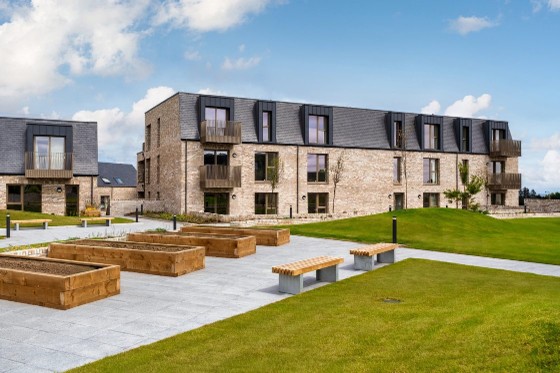
The apartment buildings also have a shared space of their own in the podium courtyard, a landscaped area that all the apartment residents can use together. Its raised planters are deliberately open ended. If residents want to, they could take them on for allotment style growing, turning a communal garden into something they run between them. Nobody has to, which is rather the point: the space is provided, and what it becomes is left to the people who live around it.
What are the homes like to live in?
Settling somewhere depends on the ordinary things. Space that works, somewhere to put the daily clutter, running costs you are not anxious about. People who are comfortable in their home are more likely to stay, and staying is how community forms in the first place.
Residents at St Andrews West are consistent on the homes themselves. On quality: “The quality of the home was important for us, and we are delighted with it.” “The bathrooms are just gorgeous; it’s like being in a five-star hotel in your own house.” On space: “The storage space throughout is brilliant, we do not know what we would do without the utility cupboard.” And on running costs, more than one household volunteered how low their energy bills are, helped by strong insulation and large windows that bring in warmth.
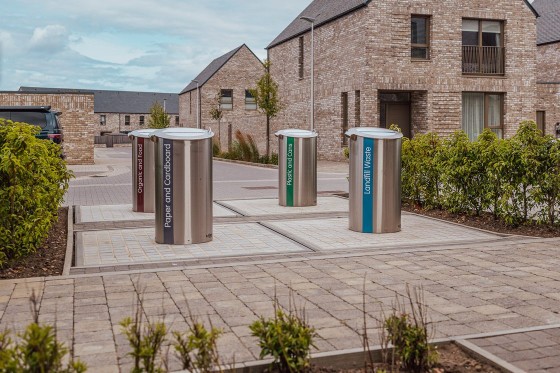
Even the practical infrastructure plays a part. The development uses an underground bin system rather than wheelie bins at every home. Residents mention it often, and not only for tidiness. As one put it, the bins are “very clever and very social,” in the placemaking equivalent of a ‘watercooler moment’ an unexpected reminder that incidental contact can come from the most ordinary of shared systems.